
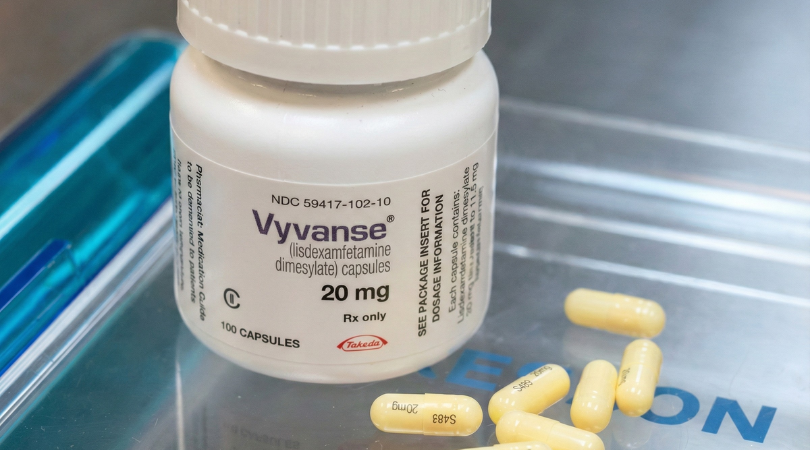
Vyvanse for ADHD Treatment in Oregon and Washington
Long-acting ADHD medication management available throughout the Pacific Northwest
Vyvanse Dosing: Length Matters
(no matter what she says)
Your body can only convert so much prodrug at a time. Hit that ceiling.
After that? More pills = more hours, NOT more focus.
CONVERSION CEILING
(Max your body can process at once)
30 mg
Not hitting ceiling
6–8 hrs
Too short?
50 mg
HITTING CEILING
(sweet spot)
10–12 hrs
Perfect!
70 mg
Still hitting same ceiling
Just more prodrug to convert
13–14 hrs
Longer!
WHAT IS THIS
If 40 mg works great but wears off at 3 pm:
Bump to 50–60 mg
= Same focus level
= Lasts til dinner
NOT stronger.
Just LONGER.
Fun fact: This is why you can’t just take more to get higher. Your body is like “cool story bro, I can only convert so fast.”
Literally built-in abuse prevention. Pretty clever, actually.
LENGTH MATTERS (seriously though)
Your body has a conversion ceiling - it can only process so much prodrug at once. Hit that sweet spot and you're good. More pills after that? Same focus level, just longer duration. 40mg lasting 8 hours vs 60mg lasting 12 hours = same intensity, different runtime. It's like the extended cut of a movie, not a louder volume.
What It Is
Vyvanse is lisdexamfetamine, a long-acting stimulant approved for ADHD and binge eating disorder. It's a Schedule II controlled substance, just like Adderall, but there's a key difference in how it works. Vyvanse is what's called a prodrug, which means it's completely inactive when you swallow it. Your body has to convert it into dextroamphetamine before it actually does anything, and that conversion happens gradually over several hours. This is why most people find Vyvanse smoother and less intense than other stimulants. Less of that jittery, speedy feeling, more of a steady background hum that just helps you function normally.
It's designed to last ten to fourteen hours depending on how your particular metabolism handles it. One capsule in the morning and you're covered for the day.
What It Does
Vyvanse does the same basic job as other ADHD stimulants. If you have ADHD, your dopamine and norepinephrine systems aren't working right. You're juggling a thousand thoughts while everyone else is comfortably managing two or three. Vyvanse increases the availability of these neurotransmitters, which helps you actually pay attention to things when you need to, be less impulsive, and think before you speak or act, and just generally improve your executive function. The constant mental chaos that's been your baseline since childhood quiets down enough that you can engage with normal daily tasks without it feeling like pushing a rock up a mountain.
The prodrug design matters for a couple reasons. You can't crush it or snort it for a faster high, which is why it has lower abuse potential than immediate-release stimulants. It's also why the experience tends to feel less like you chugged a pot of coffee and more like your brain finally has adequate processing power to handle regular human tasks.
How It Works
When you take Vyvanse, it just sits there inactive until your body breaks it down through your bloodstream and digestive system. That conversion process gradually turns lisdexamfetamine into dextroamphetamine, which is the active compound that actually works on your brain. Because this happens slowly and consistently over hours, you get steady medication coverage instead of a sharp spike and crash. It's more like a slow drip than someone turning a fire hose on full blast.
Once it's converted to dextroamphetamine, it works like any other amphetamine, boosting dopamine and norepinephrine to help your brain regulate attention and behavior. The difference is in the delivery system, not the end result.
What It Feels Like When It's Working
When Vyvanse is working properly, your brain finally has enough bandwidth to handle normal life without feeling like you're constantly drowning. You can start tasks without needing to negotiate with yourself for forty-five minutes first. You can maintain a conversation without losing track of what everyone's talking about every thirty seconds. The mental noise that's been running nonstop in the background stops being the loudest thing in your head.
When it kicks in is usually pretty subtle, and you won't necessarily feel a "whoop there it is" moment like you might with immediate-release medications. Things just gradually become easier. You're able to focus, stay on task, follow through on things you start. A lot of people really prefer this, some people find it too subtle and want to actually feel something happening, but it does beg the question: are you using this to focus better, or to get a huge burst of chemical energy? Because option A is fine, and option B sounds more like addiction than ADHD, and we don't want to be the reason someone needs NA. Any provider that actually cares is going to do their best to make sure that anyone getting stimulants actually needs them.
Once the dosing is right, Vyvanse should get you from breakfast through dinner, or around ten to twelve hours. This is great if you need all-day coverage for work or school. If you're still feeling the effects at bedtime, then sleep isn't gonna come easy, and that means you need to change your dose or the time you're taking it.
Vyvanse won't make you suddenly want to tackle your to-do list or make boring tasks fun. What it does is make it possible to get up and get going on that list of overdue reminders, without your brain inventing a million and one reasons why something else is totally more important for just one second (because spoiler: it's not, and it won't be one second).
Common Side Effects
Appetite suppression is the big one and it can be pretty significant. Food stops being interesting and you'll genuinely forget to eat if you're not paying attention. You need to be deliberate about eating meals even when you're not hungry, because running on empty while taking stimulants will wreck your focus, your mood, and pretty much everything else you're trying to improve.
Dry mouth is extremely common. You'll be drinking water constantly. Get used to it.
Sleep problems happen if the medication lasts too long for you or if your dose is too high. Some people are still feeling the effects at bedtime, which makes falling asleep nearly impossible. Taking it first thing in the morning helps, but if you're consistently lying awake at midnight, the medication might just last too long for your system.
Headaches are pretty common during the adjustment period, especially when you're first starting or when your dose gets increased. Some people feel jittery or overstimulated if the dose is too high. Mood changes can happen too. Irritability or mood crashes when it wears off in the evening, or feeling emotionally flat while it's actively working. These are worth paying attention to and discussing with whoever's managing your medication.
Heart rate and blood pressure can increase on Vyvanse. If you've got heart issues, this needs to be monitored. Anxiety or worsening of existing anxiety is possible. Some people experience mood swings. Rarely, people can have more serious psychiatric symptoms at higher doses like paranoia or hallucinations, but this isn't common. I've never actually seen it happen IRL, but that doesn't mean it can't, won't, or doesn't happen. Risk level is a lot lower with this med than with some of the others, but it's still there.
What It Looks Like When It's Not Working
If Vyvanse isn't working for you, you'll still find yourself dealing with all the same ADHD symptoms that brought you in for treatment. You'll feel out of focus, behind on your list, and everything will feel like it's just a bit more than you're trying to deal with today (or tomorrow). Or maybe the side effects are so rough that whatever benefit exists gets completely buried under feeling terrible.
Sometimes it's a dosing issue. Too low and nothing happens. Too high and you feel overstimulated, anxious, or just wrong. Sometimes Vyvanse just isn't the right medication for your particular brain chemistry. Some people need shorter-acting stimulants that they can dose multiple times throughout the day. Others do better with methylphenidate options like Ritalin or Concerta instead of amphetamines. Some people need to explore non-stimulant approaches altogether.
If you're consistently taking it and either seeing no improvement or feeling worse instead of better, you need to let us know. Don't keep suffering through it hoping things will spontaneously improve, because they won't.
Timeline for Noticing Effects
Vyvanse takes longer to kick in than immediate-release stimulants because your body has to convert it first. Most people start noticing effects within one to two hours of taking it. Peak effect usually happens around three to five hours in, and then it tapers off gradually over the next several hours. Total duration is usually ten to fourteen hours depending on your metabolism.
You should know within the first few days whether it's doing anything useful. Stimulants work immediately, not over weeks like antidepressants. If you're on day five and noticing absolutely zero difference in your ability to focus or function, either Vyvanse isn't the right medication for you, or more likely, the dose is too low and needs to be adjusted up a bit.
Finding your optimal dose usually takes a few weeks of gradual adjustments. Most providers start low and increase slowly until you find the sweet spot where it's actually helping without making you feel like garbage.
Real Talk About ADHD Treatment in Oregon and Washington
Vyvanse is expensive, but also totally worth it, in our opinion. Really expensive if your insurance coverage isn't great. Generic lisdexamfetamine became available relatively recently which helps, but it's still not cheap compared to older stimulant options. If cost is a major factor, there are effective alternatives that won't destroy your budget. The perfect medication doesn't mean anything if you can't afford to take it consistently.
The smooth, long-lasting effect that makes Vyvanse ideal for some people is a dealbreaker for others. If you're sensitive to medications, or if you don't actually need twelve-plus hours of stimulant coverage, that much continuous stimulation might be too much. You can't turn it off halfway through the day. You can't adjust the timing once you've already taken it. If this becomes an issue, there's other options designed for shorter or more flexible coverage.
Some people open the capsule and split the dose to lower it, which technically works but it's messy and not officially recommended. If you need a lower dose or for it to wear off earlier, let us know so we can fix it, instead of trying to jimmy rig the dosing on your own.
Here's something important about Vyvanse dosing that's different from other stimulants: your body can only convert so much lisdexamfetamine at a time. There's a conversion ceiling. Once you hit the dose where you're maxing out that conversion rate, taking more doesn't make it stronger, it just makes it last longer because you have more prodrug sitting around waiting to be converted. Length matters here (no matter what she says). So if 40mg works great for eight hours but wears off too soon, increasing to 50mg or 60mg isn't going to make you more focused, it's going to give you the same level of focus for ten or twelve hours instead. This is why finding your optimal Vyvanse dose is about finding the sweet spot where you hit your conversion ceiling and get the duration you actually need.
Tolerance builds over time with any stimulant, and Vyvanse is no different, even though it's more resistant and consistent in general. This doesn't mean the medication stops working, it just means that your brain adjusts to having adequate neurotransmitter levels available, so you won't feel that same initial intense effect after the first few weeks. No worries. That's normal. The goal is sustained improvement in your ability to function, not chasing some kind of feeling or high.
If you miss a dose, your ADHD symptoms will come roaring back immediately. That means that the brain fog, inability to focus, everything that was manageable yesterday suddenly feels impossible again. That doesn't mean it's some kind of unhealthy dependency or an addiction; it's just ADHD without medication, same as someone with terrible vision needing their glasses before they go for a drive, at least if they plan on ever getting there. Same concept.
Getting stimulants prescribed in Oregon and Washington involves navigating insurance hassles, prior authorizations, and pharmacy policies that can make you feel like you're being treated like a druggie just for needing your medication.
If you're a student at Oregon State, Western Washington University, Gonzaga, Willamette, University of Washington Tacoma, Clark College, or any of the other colleges and universities throughout Washington and Oregon, you've definitely seen people crushing up and snorting other people's ADHD meds to cram for exams or pull all-nighters. This is exactly why those who actually need these medications for legitimate treatment get given the third degree by every pharmacist with something to prove. It sucks. Don't contribute to that.
Vyvanse was specifically designed to have lower abuse potential because of the prodrug mechanism, and it genuinely does. You can't bypass the gradual conversion process to get a quick high. That doesn't mean people don't try, but at that point, the juice almost certainly isn't worth the squeeze.
ADHD Treatment at LiveWell Psychiatry Throughout Oregon and Washington
LiveWell Psychiatry and Men's Health provides ADHD evaluation and medication management for patients throughout Oregon and Washington, including Portland metro, Vancouver, Gresham, Beaverton, Hillsboro, Salem, Eugene, Corvallis, Bend, and surrounding communities. If you're dealing with ADHD symptoms and wondering whether Vyvanse or another treatment approach might help, we can talk about what makes sense for your specific situation.
We don't hand out stimulant prescriptions like candy. They're not candy, it's not Halloween, and they probably don't taste that good anyway. We also don't make people who genuinely need medication go through a three ring circus to get it. Good ADHD care exists somewhere between those extremes.
Vyvanse is a tool, not a cure or personality transplant. When it works for someone with ADHD, it gives you access to the same baseline level of functioning that people without ADHD have been operating at their whole lives without even thinking about it. The difference is significant enough that you'll probably sit there wondering why you didn't do something about this years ago. So do something about it now, before you get distracted again.