
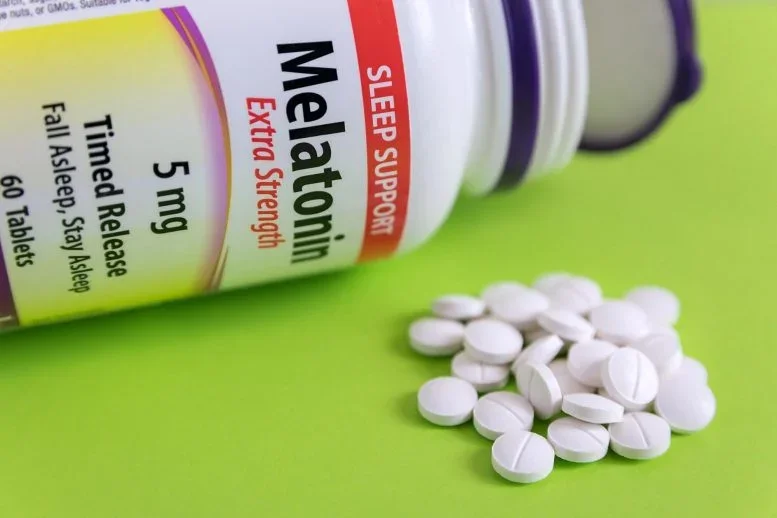
Melatonin for Sleep in Oregon and Washington
Circadian rhythm regulation supplement available throughout the Pacific Northwest
Melatonin: Not Actually a Sleep Drug
It’s a “when to sleep” signal, not a “knock you out” button
WHAT PEOPLE THINK
Sleeping pill
Knocks you out
Take more = sleep harder
Works immediately
WHAT IT ACTUALLY DOES
Circadian rhythm signal
Tells body “it’s nighttime”
More ≠ better
(0.5–3 mg is plenty)
Take 1–2 hours BEFORE you want to sleep
HOW TO ACTUALLY USE IT
Take 0.5–3 mg (NOT 10 mg gummies) 1–2 hours before bed
Dim the lights, limit screens, let it work
It’s helping your body remember bedtime exists, not forcing sleep
NOT A SLEEPING PILL
Melatonin is a circadian rhythm signal, not a knockout button. It tells your body 'it's nighttime' - doesn't force sleep. Take 0.5-3mg (NOT 10mg gummies) 1-2 hours BEFORE bed. More ≠ better. Works best for sleep schedule issues, not anxiety-based insomnia.
What It Is
Melatonin is a hormone your body naturally produces to regulate your sleep-wake cycle. You can also buy it as an over-the-counter supplement. It's not FDA regulated as a medication because it's classified as a dietary supplement, which means quality and dosing can vary wildly between brands.
Your body makes melatonin when it gets dark, which signals that it's time to wind down for sleep. The supplement version is supposed to mimic that natural process.
What It Does (And Doesn't Do)
Here's what people get wrong about melatonin: it's not a sleeping pill. It doesn't knock you out. It's a signal to your body that says "hey, nighttime is happening, maybe start getting sleepy." Think of it as a gentle suggestion to your circadian rhythm, not a command.
Taking melatonin tells your body what time of day it should be, which can help reset your internal clock if it's gotten screwed up from jet lag, shift work, or just staying up too late scrolling through your phone every night.
It works best for circadian rhythm issues (your sleep schedule is off) rather than garden variety insomnia (you're stressed and can't shut your brain off). If your problem is anxiety keeping you awake, melatonin probably isn't going to fix that.
How It Works
Melatonin binds to receptors in your brain that are involved in regulating your circadian rhythm. When melatonin levels rise in your system, it signals to various parts of your body that it's nighttime and they should start their nighttime routines (lowering body temperature, reducing alertness, preparing for sleep).
Your body naturally starts producing melatonin a few hours before your usual bedtime. Taking supplemental melatonin is trying to recreate or enhance that signal.
What It Feels Like When It's Working
You probably won't feel much of anything, which confuses people who expect it to work like Ambien. You might notice you feel slightly drowsy or relaxed after an hour or two. Your eyes might feel a little heavier. But it's subtle.
The effect is more about making it easier to fall asleep at your target bedtime rather than forcing sleep to happen. If you take it at the right time and actually try to sleep (lights off, screens away, lying down), you'll probably find it easier to drift off than you would without it.
Common Side Effects
Melatonin is generally well tolerated. Most people don't have significant side effects.
Some people get vivid dreams or nightmares on melatonin. Not dangerous, just weird.
Next-day grogginess is possible, especially if you take too much or take it too close to when you need to wake up.
Headache can happen occasionally.
Nausea is rare but possible.
Some people feel groggy or foggy the next day, particularly with higher doses.
What It Looks Like When It's Not Working
You take it and nothing happens. You're still wide awake. You still can't sleep. Your insomnia is completely unaffected.
This usually means one of a few things:
- Your timing is wrong (you're taking it too close to bedtime instead of 1-2 hours before)
- Your dose is wrong (either too low or way too high, both can be problems)
- Your insomnia isn't a circadian rhythm issue, it's something else (anxiety, depression, pain, sleep apnea)
- The brand you're using has garbage quality control and the actual melatonin content doesn't match the label
Melatonin isn't going to fix chronic insomnia caused by anxiety or depression. It's not strong enough. If your brain won't shut off because you're stressed or depressed, you need something different.
Timeline for Noticing Effects
Take it 1 to 2 hours before you want to sleep. Not right before bed. It needs time to work with your natural sleep drive.
Effects are subtle and build over that 1-2 hour window. You won't feel suddenly sleepy 30 minutes after taking it like you would with an actual sleep medication.
Some people find it works better with consistent use over several days rather than just one-off doses. Your body might respond better once it gets used to the timing.
Real Talk About Melatonin
Everyone recommends melatonin because it's "natural" and over-the-counter. But natural doesn't automatically mean effective or appropriate for your situation. If you have actual insomnia (not just a shifted sleep schedule), melatonin probably isn't going to cut it.
The dosing on most melatonin supplements is absurd. You see 10mg gummies everywhere. Your body naturally produces maybe 0.3mg at night. Studies show that 0.5mg to 3mg is usually effective. Taking 10mg doesn't make you sleep better, it just makes side effects more likely and might actually work worse because you're overwhelming the receptors.
Quality control is a huge problem with supplements. A study found that actual melatonin content in supplements varied from 83% less than labeled to 478% more than labeled. Some products contained serotonin (which shouldn't be in there at all). Buy from reputable brands and don't assume the label is accurate.
Melatonin is popular around college towns throughout Oregon and Washington (Portland, Eugene, Corvallis, Pullman, Bellingham) because students' sleep schedules get destroyed and they're looking for something that'll help. It can help reset your schedule if you commit to actually using it correctly and not just taking it randomly whenever you feel like it.
Timing matters more than dose. Take it at the same time every night, 1-2 hours before your target bedtime. Dim the lights. Put your phone away. Let it work with your natural sleep drive instead of against it.
It's not going to work if you take it and then sit in front of bright screens for two hours. Blue light from screens suppresses melatonin production. You're basically fighting against yourself.
For shift workers or people dealing with jet lag, melatonin can be genuinely helpful for resetting your clock. For chronic insomnia from anxiety or depression, it's probably not going to do much.
Don't use melatonin long-term without figuring out why your sleep is screwed up in the first place. If you've been taking it every night for months and still have insomnia, something else needs to be addressed.
Sleep Treatment Throughout Oregon and Washington
LiveWell Psychiatry and Men's Health provides sleep and insomnia treatment for patients throughout Oregon and Washington, including Portland metro, Vancouver and Clark County, Salem, Eugene, Corvallis, Bend, Spokane, Tri-Cities, and surrounding communities. If melatonin isn't cutting it or if your sleep problems are connected to anxiety, depression, or other mental health issues, we can evaluate what's actually going on and what might actually help.
Melatonin is fine for what it is: a mild circadian rhythm regulator that can help if your sleep schedule is off. It's not a cure-all and it's definitely not a replacement for actual sleep medication when that's what you need. But for the right situation, used correctly, it can help. Just don't expect miracles from a hormone your body already makes.